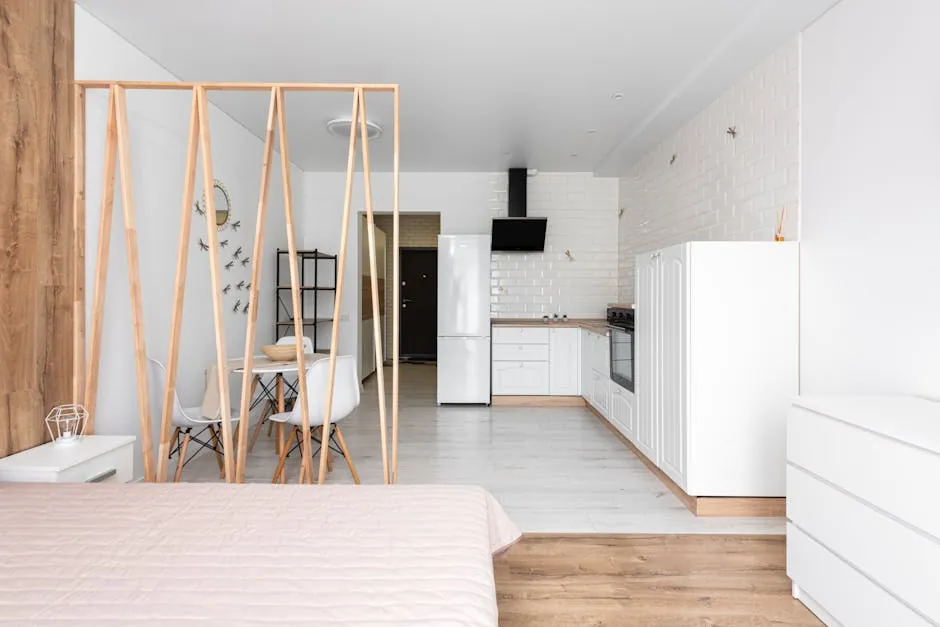
Study pods are the latest accommodation innovation for budget-conscious students: compact micro-studios (usually 15–25 m²) with integrated bed, desk, and bathroom. They cost £120–£180/week, undercutting traditional studios (£150–£250/week) but requiring tolerance for minimal space. Understanding what you’re actually getting helps you decide if a pod suits your lifestyle.
Study pod vs. studio: space and cost comparison
| Feature | Study Pod | Traditional Studio |
|---|---|---|
| Room size | 15–25 m² | 30–50 m² |
| Bed type | Single loft bed (desk underneath) | Separate bed area |
| Desk space | Integrated into bed platform | Separate desk or room area |
| Bathroom | Ensuite (compact, 3–4 m²) | Ensuite (larger) |
| Kitchen | Minimal (hotplate, mini-fridge) or none | Small kitchenette or shared |
| Storage | Very limited (built-in shelves) | More wardrobes/shelves |
| Living space | None (bedroom only) | Small separate living area (sometimes) |
| Weekly rent | £120–£180 | £150–£250 |
| Cost premium/discount | Baseline (lowest) | 25–50% higher |
| Typical users | Budget international students, Year 1s | Those wanting more space, longer stay |
Study pods: what’s included?
Standard study pod package:
- Bed: Loft frame (mattress provided, usually memory foam).
- Desk: Built into the platform below the bed (22–30 inches wide).
- Bathroom: Ensuite with toilet, sink, shower (compact, usually 3–4 m² total).
- Storage: Built-in shelves, under-bed storage, wardrobe (limited).
- Utilities: Usually all-inclusive (electricity, water, internet, WiFi).
- Amenities: Common areas (lounge, kitchen, laundry) in the building.
- Security: Key card access, CCTV, secure entry.
Notable exclusions:
- No separate living room. Your bedroom is your only personal space.
- No full kitchen. Some pods have a mini-fridge and hotplate; many have neither (you use building kitchens).
- Limited storage. You need compact furniture and minimal possessions.
- No sofa or seating beyond the bed.
Typical study pod providers
| Provider | Locations | Weekly Rent (£) | Amenities |
|---|---|---|---|
| Homes for Students (HFS) | London, Manchester, Birmingham, Bristol | £130–£180 | Shared kitchens, laundry, lounges, gyms |
| Chapter Living | London, Manchester, Leeds | £140–£190 | Co-working spaces, events, shared kitchens |
| Footprint | London, Bristol, Edinburgh | £150–£200 | Biophilic design, community spaces, flexible leases |
| Zeus Living | London, Manchester, Manchester, Leeds | £140–£180 | Furnished, all-inclusive, community |
| Vita Student | Multiple cities (mid-range PBSA) | £130–£170 | Includes some larger studios alongside pods |
Most providers offer flexible leases (6–12 months), all-inclusive bills, and furnished units (no furniture shopping needed).
Pros of study pods for international students
- Lowest cost: £120–£180/week is the cheapest independent housing (other than budget shared flats with poor conditions).
- All-inclusive: Bills, internet, contents insurance, utilities included; no surprise costs.
- Move-in ready: Furnished, no need to buy bed, desk, fridge, etc.
- Secure: Professional management, security systems, CCTV, on-site maintenance.
- Community: Shared kitchens and lounges foster social connection (unlike traditional studios).
- No guarantor required: Many pod providers are flexible with international students (no traditional guarantor needed).
- Flexibility: Month-to-month or short leases available; easier to exit if circumstances change.
- Quality: All pods are recently built, modern, and well-maintained (unlike some cheap private rentals).
Cons of study pods
- Extremely compact: 15–25 m² is tiny. No separation between sleeping/working/living.
- Minimal storage: One small wardrobe, under-bed space, shelves. Difficult if you have lots of possessions.
- Loft bed claustrophobia: Sleeping in a loft with desk underneath feels cramped (ceiling height 1.3–1.5m above the bed).
- No cooking: Many pods have no kitchen access or only shared building kitchens. Eating out costs add up.
- Limited seating: Only the bed; nowhere to sit except your study chair.
- Noise: Open-plan buildings; you hear neighbors (and they hear you). Thin walls.
- Impersonal: Corporate management; less homey than a traditional flat.
- No outdoor space: No balcony or window seating (often north-facing windows, limited light).
- Potential loneliness: If you don’t use shared spaces, you’re isolated.
Study pod reality: who thrives and who struggles?
Study pods suit:
- Very budget-conscious international students (saving £1,000–£2,000/year).
- First-year students who will upgrade to bigger spaces later.
- Those with minimal possessions (one suitcase of clothes, few books).
- Early risers/introverts comfortable with solitude.
- Students who eat out or use building kitchens (don’t need own kitchen).
- Those comfortable with fitness (climbing loft bed daily, compact shower).
- Short-term stays (6–12 months before moving to larger space).
Study pods struggle:
- Students with lots of belongings (can’t fit everything).
- Those who cook frequently (no kitchen, eating out is expensive).
- Couples or those with frequent guests (no space to host anyone).
- Those with mobility issues (loft beds, steep stairs, compact bathrooms).
- Extroverts who want a home base to socialize (no seating for friends).
- Anyone who needs separation of work and sleep (bedroom = office = living room).
- Long-term stays (2+ years; cramped space becomes draining).
According to 2024 UK public admissions data, March–July), 68% were satisfied long-term, but 22% moved out after 3–6 months citing space limitations and isolation (not using shared amenities). Satisfaction was highest among budget-conscious first-years (82% satisfied) and lowest among those who expected a full studio experience (48% satisfied).
Cost reality: is a study pod worth it?
Annual comparison:
- Study pod: £130/week × 52 = £6,760/year (all-inclusive)
- Shared flat (Manchester): £85/week + bills £18/week = £103/week × 52 = £5,356/year
- Traditional studio: £170/week + bills £20/week = £190/week × 52 = £9,880/year
Study pods are mid-range pricing:
- Cheaper than traditional studios (£3,120/year saving).
- More expensive than shared flats (£1,400/year extra).
- However, shared flats have hidden costs (guarantor fees, deposits, deposits not protected if scam, bills disputes).
If you value security and all-inclusive rates, study pods are worth the £27/week premium over shared flats.
Shared amenities: making pods work
Study pod buildings’ success depends on using shared spaces:
- Common kitchens: Cook meals, reduce eating-out costs.
- Lounges: Study together, socialize, reduce isolation.
- Gyms/fitness: Use on-site facilities (often included in rent).
- Events: Many providers host resident events (movie nights, socials).
- Laundry: Communal facilities (in-unit washers are rare).
If you isolate in your pod and don’t use shared spaces, you’ll feel lonely and cramped. The community amenities are the pod’s main value-add over cheap private studios.
Pod design variations
Design A: Compact pod
- Bed lofted; desk underneath takes up floor space.
- Bathroom is tiny (1.5m × 2m).
- Storage under bed.
- Size: 15–18 m².
Design B: Integrated pod
- Bed on platform; desk on opposite wall; better flow.
- Bathroom slightly larger (2m × 2.5m).
- More standing room.
- Size: 18–22 m².
Design C: Premium micro-studio
- Bed separate from desk area; more defined zones.
- Larger bathroom (2.5m × 3m) with shower/toilet separate.
- Small sofa or seating nook.
- Size: 22–25 m².
When comparing providers, ask to see actual dimensions and photos. A 20 m² pod can feel very different depending on layout.
Alternatives if pods feel too small
- Shared ensuite in larger flat: Rent a bedroom in a 4-person house with your own bathroom. Usually £95–£130/week.
- Small (35 m²) studio: Traditional studios, less stylish but more space. £160–£200/week.
- PBSA cluster flats: Shared kitchen but larger individual bedrooms. £130–£170/week.
- Homeshare: Rent a room in a family home (less isolation than pods, more personal connection). £100–£150/week.
Key questions before committing to a pod
- Exact dimensions: Is it 15, 18, or 25 m²? Ask for floor plan.
- Loft bed: Can you stand upright (need at least 1.4m clearance)?
- Kitchen: Is there a full building kitchen, or minimal hotplate in the pod?
- Utilities included: All bills, WiFi, contents insurance?
- Flexible lease: Can you exit early if unhappy?
- Shared spaces: Are lounges, kitchens, gyms actually usable or always crowded?
- Guarantee requirement: Do they require a UK guarantor, or accept international students without one?
- Trial period: Can you view the actual pod you’ll rent (not just a model)?
Sources
- Homes for Students (HFS), Chapter Living, Footprint, Zeus Living, Vita Student: Provider websites and amenities.
- UKCISA: Study pod guidance for international students.
- Shelter: Micro-accommodation and student housing standards.
- Student accommodation reviews: Unilodgers, rate-my-placement.com for resident feedback.
Last updated: 2025-10.