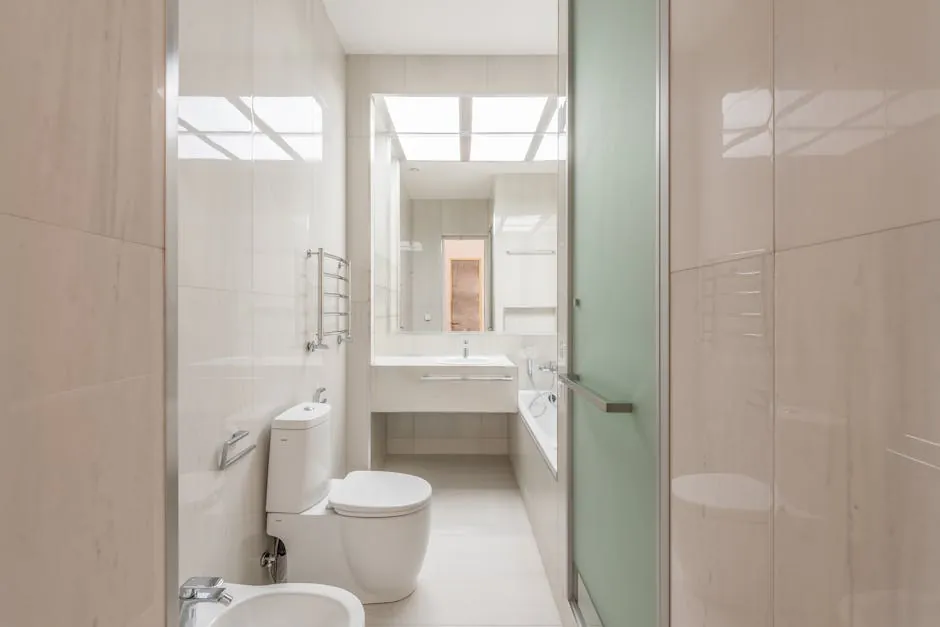
Ensuite bedrooms (private attached bathroom) cost 20–40% more than rooms with shared bathroom facilities. The premium buys privacy and convenience, but shared bathrooms reduce costs and foster social connection. Understanding the trade-offs helps you decide based on budget, personality, and priorities.
Ensuite vs. shared: quick comparison
| Feature | Ensuite | Shared Bathroom |
|---|---|---|
| Weekly rent | £150–£250 | £80–£150 |
| Cost premium | 25–40% higher | Baseline |
| Privacy | High (private bathroom) | Moderate (shared with 2–5 people) |
| Convenience | Maximum (bathroom in your room) | Lower (queue during peak times) |
| Cleanliness control | Yours alone | Depends on housemates |
| Social interaction | Less bathroom socializing | More incidental interaction |
| Maintenance liability | You maintain it | Landlord typically maintains |
| Suitable for | Introverts, early risers, those who value privacy | Extroverts, social students, budget-conscious |
Cost breakdown: ensuite vs. shared
Manchester, student shared house:
Option 1: Shared bathroom (4-bed house, 2 bathrooms, 4 occupants)
- Rent: £85/week per person
- Bills split: £18/week per person
- Total: £103/week
Option 2: Ensuite (4 studios with private bathrooms)
- Rent: £130/week per person (shared kitchen, personal bathroom)
- Bills split: £20/week per person
- Total: £150/week
Annual difference: £2,444 (47/week × 52 weeks).
For a tight budget, shared bathroom saves significantly.
Ensuite: pros and cons
Advantages
- No queuing: Your bathroom is always available (especially crucial during morning rush, 7–9 AM).
- Cleanliness control: You maintain your bathroom to your standard (no waiting for lazy housemates to clean).
- Privacy: No awkwardness with housemates seeing you in towels or bathrobe.
- Convenience: Bathroom essentials (shower, toilet, sink) steps away; reduces morning stress.
- Reduced conflicts: No arguments over bathroom cleaning schedules or shower times.
- Better for early risers: If you wake at 6 AM for classes, no waiting for others.
Disadvantages
- Higher cost: 25–40% premium adds up (£2,400+/year extra).
- Isolation: Bathroom is private; less incidental housemate interaction.
- Maintenance burden: You’re responsible for cleaning and minor repairs (blocked drain, leaky tap).
- Smaller bedrooms: Ensuite units often have smaller bedrooms to fit the bathroom (trade-off in space).
- Less social: Shared bathrooms create natural meeting points; ensuites eliminate this.
- Utility costs higher: Private ensuite uses more water/heating than shared facilities.
Shared bathroom: pros and cons
Advantages
- Lower cost: Saves £20–£40/week (significant for international students).
- Social connection: Bathroom is natural gathering spot; more housemate interaction.
- Larger bedrooms: Rooms are bigger when bathroom isn’t attached.
- Shared responsibility: Landlord typically maintains the bathroom (not your burden).
- Community building: Shared routines (morning showers, evening prep) create bonding.
- Environmentally friendlier: Shared facilities use less water/energy per person.
Disadvantages
- Morning queues: Peak times (7–9 AM) mean waiting your turn (especially before 9 AM classes).
- Dependency on housemates: If someone spends 45 minutes showering, you’re delayed.
- Cleanliness issues: Shared bathroom is only as clean as the least-tidy housemate.
- Lack of privacy: Towels, toiletries, and personal items visible to others.
- Scheduling friction: “Whose turn is it to clean?” can breed resentment.
- Less convenient: Bathroom may be one floor away; affects late-night/early-morning access.
Managing shared bathrooms: rules and habits
If you choose shared bathroom, establish clear house rules with housemates on move-in day:
Cleaning rota:
- Rotate weekly or fortnightly (e.g., Person A cleans Week 1, Person B Week 2, etc.).
- Define “clean”: sweep floor, wipe mirror/sink, clean toilet, dispose of hair.
- Set standard: “Reasonably clean, not show-home standard.”
- Enforcement: If someone misses their week, the rest collectively remind them.
Shower schedule:
- Peak times (7–9 AM): Max 10 minutes per shower during this window (use a timer if needed).
- Off-peak times: Flexible (no strict limit).
- Example rule: “Weekday mornings, max 10 mins. Weekends, flexible but be considerate of housemates.”
Bathroom booking (if extreme):
- Some shared houses use a shared Google calendar or whiteboard for bathroom slots during peak times.
- Overkill for most students, but helps if housemates have very different schedules.
Shared supplies:
- Agree upfront: Who provides cleaning supplies, toilet roll, soap?
- Option A: Rotate (each person buys for their week).
- Option B: Shared fund (each pays £5/month into a kitty for supplies).
- Option C: Whoever uses the most provides.
Personal space:
- Each person gets a shelf or cabinet for toiletries.
- Agree not to use others’ items (shampoo, towels, etc.) without permission.
- Establish a “drying rack” for wet towels (not left on radiators).
Student preference: what does research show?
According to 2024 UK public admissions data, June–August):
- 56% prefer ensuite (worth the premium for privacy and convenience).
- 34% prefer shared bathroom (budget-conscious; don’t mind social aspect).
- 10% have no strong preference (depends on housemates and timing).
By year of study:
- Year 1: 62% prefer ensuite (haven’t built confidence yet; value privacy).
- Years 2–3: 48% prefer ensuite; 42% prefer shared (more socially established; budget increasingly matters).
By personality:
- Introverts: 68% prefer ensuite.
- Extroverts: 47% prefer ensuite; 45% prefer shared.
- Ambiverts: 50–50 split.
Hybrid arrangements: semi-ensuite and shared-ensuite
Some properties offer middle-ground options:
Semi-ensuite: Bedroom has a private toilet and sink, but shower is shared.
- Cost: 10–20% premium over shared.
- Benefit: Privacy for toilet/sink but shared shower logistics.
Shared-ensuite (en-suite shared with one housemate):
- Two bedrooms share one ensuite bathroom.
- Cost: 10–15% premium over shared.
- Benefit: Privacy with fewer people (2 instead of 4–5).
These are excellent compromises if budget is tight but you want semi-privacy.
Questions to ask when viewing
- Bathroom configuration: How many bathrooms per occupants (e.g., 4 bedrooms, 1 or 2 bathrooms)?
- En-suite available? Upgrade cost from shared bathroom?
- Bathroom maintenance: Who cleans/maintains (landlord or tenants)?
- Water pressure and heating: Test the shower during viewing (low pressure = annoying mornings).
- Ventilation: Is there a good extractor fan (prevents mold)?
- Peak-time usage: When do other housemates typically shower (align with your schedule)?
Practical decision flowchart
Choose ENSUITE if:
- Budget allows (you can afford £20–£40/week extra).
- You’re introverted or value privacy.
- You wake early (avoid morning queues).
- You’re sensitive to cleanliness standards.
- You’re studying subjects with early morning classes.
Choose SHARED BATHROOM if:
- You’re budget-conscious (save £1,200–£2,000/year).
- You’re social and enjoy housemate interaction.
- You’re flexible about morning routines (late riser, can wait).
- You trust housemates to maintain cleanliness.
- You prioritize larger bedroom space over bathroom privacy.
Try SEMI-ENSUITE if:
- You want both privacy and affordability.
- You can compromise (private toilet/sink, shared shower).
Cost-benefit analysis: is ensuite worth it?
Break-even calculation: Is the ensuite premium worth the convenience and privacy?
For many students, shared bathroom is better value, especially in Year 1 (social benefit, low cost). Year 2+ (more established friendships, willingness to pay for privacy), ensuite becomes more attractive.
However, if budget is your main constraint, shared bathroom is perfectly viable. Establish clear house rules on day one, and most shared bathroom arrangements work smoothly.
Sources
- UKCISA: Bathroom facilities and accommodation standards.
- Shelter: Shared accommodation management and disputes.
- UCAS: Accommodation types and features.
- Student surveys: Preference research from major student housing providers.
Last updated: 2025-10.