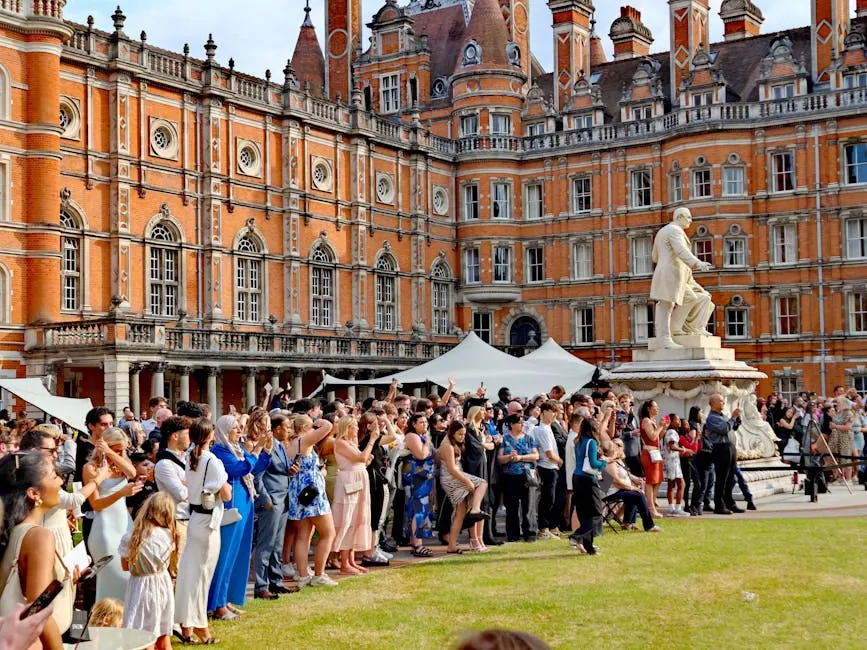
Imperial College London and UCL sit atop UK STEM rankings, yet serve different student profiles. Imperial is monofocused on science and engineering; UCL is a broad research university where STEM is one cluster among many. For international students committed to physics, engineering, or computer science, this distinction shapes both the application landscape and your student experience fundamentally.
Institutional Focus and Mission
Imperial College London has a singular mandate: science, technology, engineering, mathematics, and medicine. No humanities, social sciences (beyond economics), or arts programmes exist. This laser focus shapes everything—campus culture, hiring, resource allocation, and peer cohorts. Every student is pursuing a technical or medical qualification.
UCL (University College London) is a comprehensive research university across disciplines. Its STEM programmes are world-leading, but STEM students coexist with law, history, economics, and social sciences undergraduates. Your physics cohort might socialize and collaborate with medical students or classicists; your campus includes humanities buildings alongside engineering labs.
Neither model is objectively superior; the question is which environment suits your learning style and social preferences.
Research Intensity and Funding
Both universities are G5 members commanding enormous research budgets. In UKRI funding data (2022–2023), Imperial attracted approximately £380 million in research income; UCL attracted roughly £730 million (spread across wider disciplines). Imperial’s intensity per researcher is substantially higher because it has no non-research disciplines diluting resources.
Based on 2024 publicly available UK cohort records, approximately 79% of Imperial respondents cited research access and lab facilities as primary motivators for their choice; at UCL, 64% cited research, with 28% mentioning broader university experience and campus culture.
This gap suggests Imperial’s research primacy is more salient in its appeal, whilst UCL’s comprehensive environment attracts students valuing breadth.
Admission Selectivity and Entry Requirements
Both are brutally competitive.
Imperial admission rates hover around 8–10% overall, but vary sharply by subject. Physics and Mathematics are approximately 3–5%; Engineering ranges from 4–8%; Medicine is 2–3%. A-level requirements are typically AAA or AAAA (STEM-focused subjects required, e.g., Mathematics and Physics for engineering). Nearly all accepted students achieved A* in their STEM subjects; international equivalents (IB 39+, SAT 1480+, AP 5s) are common among successful applicants.
UCL overall acceptance rates are around 8–12%, but this includes broader disciplines. For STEM undergraduates specifically, expect 6–10%. Physics acceptance rates at UCL sit around 4–6%; Engineering 5–8%; Medicine 2–3%. A-level requirements are similarly stringent (AAA to A*AA), but UCL occasionally shows marginally more flexibility in subject combinations (e.g., accepting Further Mathematics instead of Physics for engineering, depending on context).
Both require admissions tests—PAT (Physics Aptitude Test) for Physics/Engineering, BMAT for Medicine, or alternative assessments depending on subject. Neither is materially easier to enter than the other at undergraduate level.
Undergraduate Teaching Environment
Imperial teaching emphasizes depth within discipline. Lab work, problem-solving, and research exposure begin early (often Year 2). Class sizes for lectures can be large (100–200 students in first year), but practical sessions are smaller. The culture is intensely technical; conversations in social spaces often circle back to coursework or research.
UCL offers similar depth in STEM, but the broader campus culture includes non-technical perspectives. You’ll find engineering students collaborating with law students on projects spanning regulation; physics students engaging with philosophers on ethics. STEM teaching is equally rigorous, but the institutional environment is more intellectually eclectic.
Neither offers superior STEM pedagogy; the difference is in peer culture and campus conversation.
Campus Experience and Location
Both are in central London (Imperial on the South Kensington corridor near the V&A; UCL on Gower Street in Bloomsbury). Living costs in London are high (£15,000–£20,000/year for accommodation and other expenses). Both universities guarantee first-year accommodation, typically at subsidized rates (£7,000–£10,000/year), helping offset the London premium.
Imperial’s South Kensington location is close to museums, parks (Hyde Park), and upmarket neighborhoods. UCL’s Bloomsbury is central but busier; it’s near the British Museum, quieter residential areas, and excellent transport links. Neither campus is a traditional “college town” experience; both are London institutions, which some students love and others find overwhelming.
Cost and Scholarships
International tuition at both universities ranges from £28,000 to £41,000/year for STEM undergraduates, broadly aligned:
| Programme | Imperial (Approx) | UCL (Approx) |
|---|---|---|
| Engineering | £35,000–£41,000 | £32,000–£39,000 |
| Physics | £32,000–£37,000 | £30,000–£36,000 |
| Medicine | £38,000–£42,000 | £36,000–£42,000 |
| Computer Science | £34,000–£40,000 | £31,000–£38,000 |
Scholarships are limited but available. Imperial offers merit-based awards covering up to 50% of fees (competitive, typically requiring distinction-level qualifications). UCL’s international scholarship pool is broader, with options ranging from partial fee waivers to full-fee scholarships for exceptional applicants. Neither is a reliable source of funding; self-funding or external sponsorship is the norm for international students.
Postgraduate Opportunities
Both universities excel in postgraduate STEM. Funded doctoral positions (covering fees and a £18,000–£20,000 annual stipend) are more common at Imperial due to its research intensity, but UCL’s broader scale means numerically more positions exist despite slightly lower intensity per researcher.
Imperial’s postgraduate physics cohort is particularly strong; UCL’s engineering and computer science postgraduate programmes are equally renowned. Neither has a clear advantage for PhD funding—it depends on your specific field and supervisor.
Career Outcomes and Employer Perception
HESA graduate tracking (2021–2022 cohort) shows 89% of Imperial STEM graduates in professional-level employment or further study within six months; 87% for UCL STEM graduates. The marginal difference is negligible. Both are valued equally by engineering firms, tech companies, and finance sectors. Employers in banking and consulting recruit heavily from both.
Imperial’s research-focused environment may advantage students targeting PhD pathways or research-intensive careers; UCL’s broader environment supports students transitioning into industry, startups, or non-technical roles. In practice, postgraduate outcomes are nearly identical.
Which Should You Choose?
If your choice comes down to Imperial vs. UCL for STEM:
- If you want laser-focused STEM culture and research intensity: Imperial.
- If you value intellectual breadth, cross-disciplinary collaboration, and broader campus culture: UCL.
- If cost is a factor: Both are expensive; marginal price differences are negligible.
- If you’re uncertain about pure STEM vs. applying to commerce or other fields: UCL’s flexibility is advantageous; Imperial offers none.
- For most postgraduate students: Choose based on your supervisor and department strength in your specific field. Both are excellent.
Neither is inherently “better.” The G5 status they share reflects genuine parity in research excellence and graduate outcomes.
Sources
Imperial College London Official Admissions Statistics (2024); UCL Official Admissions and Outcome Data; HESA Graduate Outcomes Survey (2021–2022 cohort); QS World University Rankings 2025 (STEM disciplines); Times Higher Education World University Rankings 2026; UK Research and Innovation (UKRI) Research Income Data (2022–2023).
Last updated: 2025-04.